What Causes Low Water Pressure in Pico Rivera Homes
Low water pressure in Pico Rivera homes usually comes down to a bad pressure regulator, corroded galvanized pipes, or a hidden leak. Here's how to tell which one.
Low water pressure in Pico Rivera homes is almost always caused by one of four things: a failing water pressure regulator, corrosion buildup inside galvanized steel pipes, a hidden leak on your side of the meter, or a partially closed shutoff valve. In most of the homes we service between Rosemead Boulevard and the Rio Hondo, the culprit is a regulator that has quietly worn out after 10 to 15 years of service. The rest of this post walks through each cause, how to tell them apart, and what a real fix costs in 2026.
We're a local plumbing contractor, so we see this every week - in 1940s bungalows near Rivera Village, in 1960s tract homes off Mines Avenue, and in newer builds along the Beverly Boulevard Corridor. The symptoms look similar. The fixes are not.
The Short Answer: Why Your Pico Rivera Water Pressure Dropped
Low water pressure Pico Rivera CA homeowners deal with is a plumbing condition where the water reaching your fixtures arrives below the 40-80 PSI range that residential plumbing is designed to handle. Anything under 40 PSI at the tap feels weak - showers dribble, washing machines take forever to fill, and the dishwasher leaves spots.
Three things cause that drop on your side of the meter: restriction (something is blocking the pipe), loss (water is escaping before it reaches the fixture), or regulation (the pressure-reducing valve is doing its job too well). Find which category you're in and the repair usually becomes obvious.
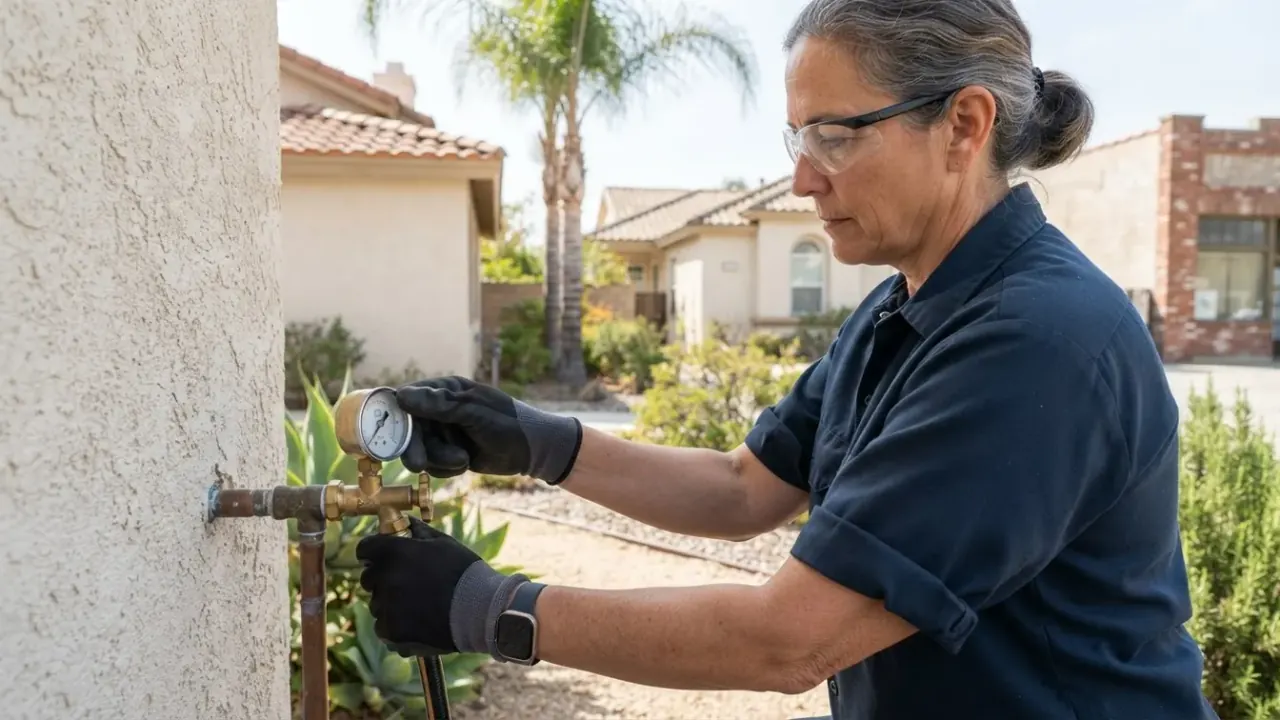
If you want a baseline number before you call anyone, screw a $12 pressure gauge onto an outdoor hose bib and open it fully. Under 40 PSI is a problem. Over 80 PSI is a different problem - one that cracks supply lines and shortens water heater life.
How Pico Rivera's Water Supply and Housing Stock Affect Pressure
Pico Rivera gets its water from the Central Basin Municipal Water District, which pulls from a mix of imported Colorado River water and local groundwater. That water is moderately hard - roughly 8 to 12 grains per gallon depending on the year - and hard water is the slow killer of residential plumbing. It leaves calcium scale inside pipes, water heater tanks, and pressure regulators.
Then there's the housing stock. A large share of Pico Rivera homes were built between 1945 and 1965. Many still have their original galvanized steel supply lines. Galvanized pipe rusts from the inside out. By the time it's 50 years old, the interior diameter can be reduced by 50 to 70 percent - which is why your neighbor's 1990s remodel has strong pressure and your 1952 ranch house does not.
We see this pattern block by block. Homes near Plumber in Rivera Village tend to have the oldest galvanized runs, while properties closer to Plumber in Beverly Boulevard Corridor mix original pipe with partial copper repipes done in the 1980s and 90s. Both areas call us for the same complaint.
The 7 Most Common Causes of Low Water Pressure in Pico Rivera CA
These are the causes of low water pressure Pico Rivera homeowners actually call us about, ranked by how often we find them on a diagnostic visit.
1. A Failing Water Pressure Regulator
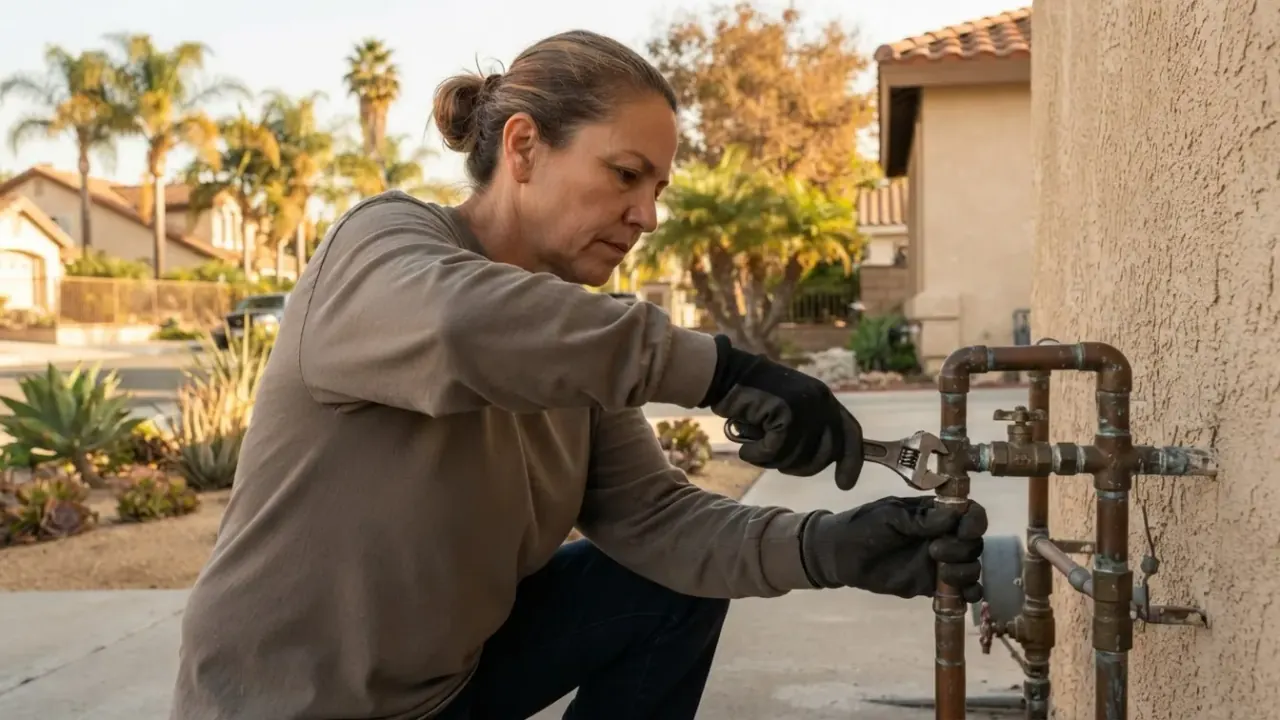
The pressure regulator (also called a PRV) sits near your main shutoff valve and steps incoming city pressure - often 100 to 150 PSI - down to a safe 50-60 PSI inside the house. When the internal diaphragm wears out, it can fail in two directions: it sticks open (high pressure, dripping relief valves) or it sticks closed (low pressure everywhere). Most Pico Rivera regulators we replace are 12 to 20 years old. Replacement runs $250-$450 in 2026, parts and labor, and takes about 90 minutes.
2. Corroded Galvanized Steel Pipes
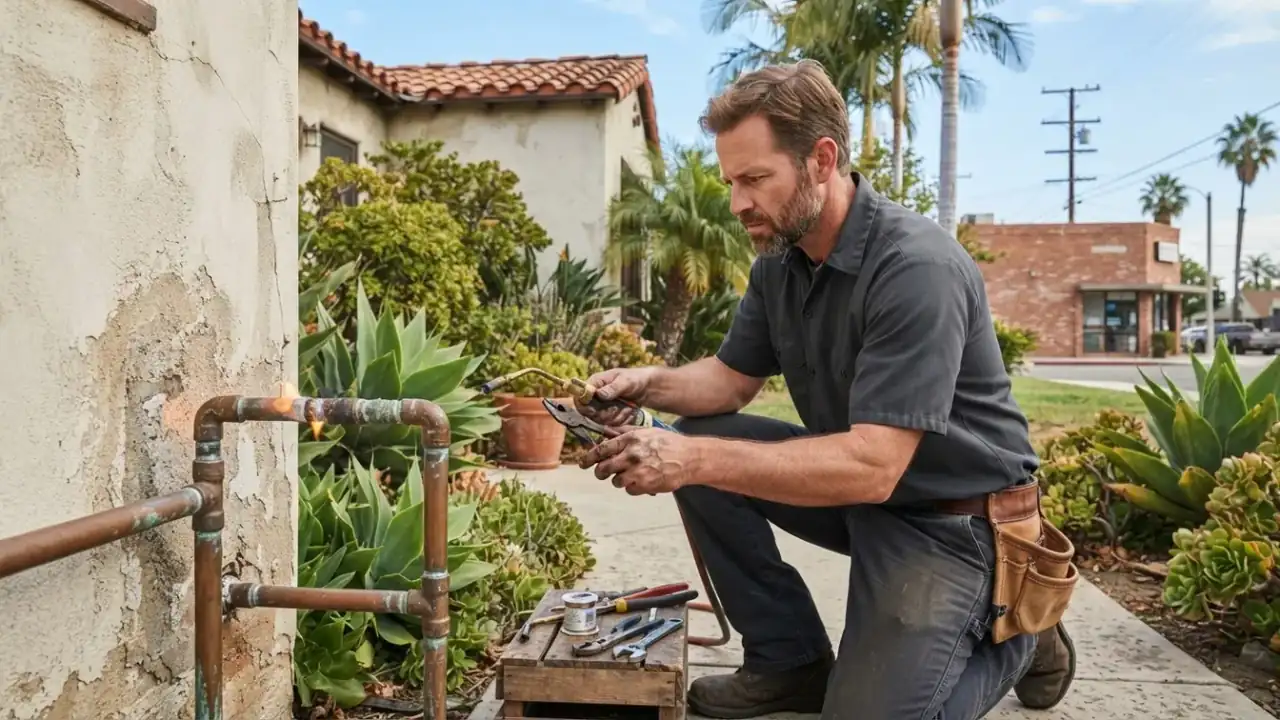
If your home was built before 1970 and has never been repiped, this is your likely answer. Galvanized pipe narrows with age. You'll notice it first at the far end of the house - the back bathroom, the laundry room - because pressure drops with distance. There's no cleaning fix that lasts. A partial repipe to copper or PEX typically runs $2,500-$6,500 depending on how many fixtures are involved.
3. A Hidden Water Leak
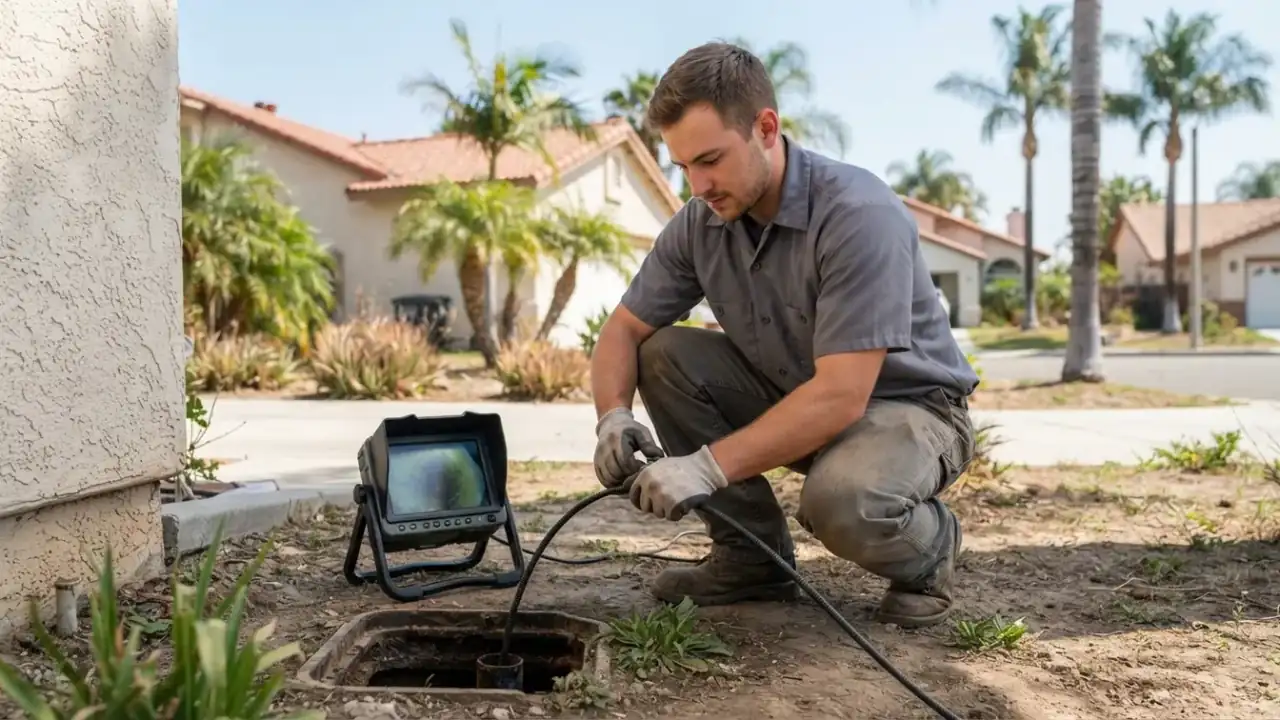
A slab leak or a pinhole leak in a wall can bleed enough water to drop your pressure without ever showing a puddle. The tell is your water bill. If your usage jumped 15-30 percent with no change in habits, you have a leak. Professional Leak Detection And Repair Pico Rivera CA uses acoustic listening and thermal imaging to find it without tearing up your floor. Most residential leak calls run $350-$900 to locate and repair.
4. A Partially Closed or Failing Main Shutoff Valve
Gate valves - the round-handle type common in older Pico Rivera homes - break internally. The handle turns, but the gate inside doesn't fully open. We find this on maybe one in eight diagnostic calls. A new ball valve installed at the meter costs $180-$320.
5. Clogged Aerators and Cartridges
If only one faucet is weak, unscrew the aerator at the tip of the spout. Hard water scale and sediment from the main line collect there. Soak it in white vinegar for 30 minutes and scrub it with an old toothbrush. Same story inside a single-handle faucet cartridge - mineral buildup restricts flow. A cartridge replacement is $15-$40 in parts if you DIY it.
6. A Clogged or Scaling Water Heater
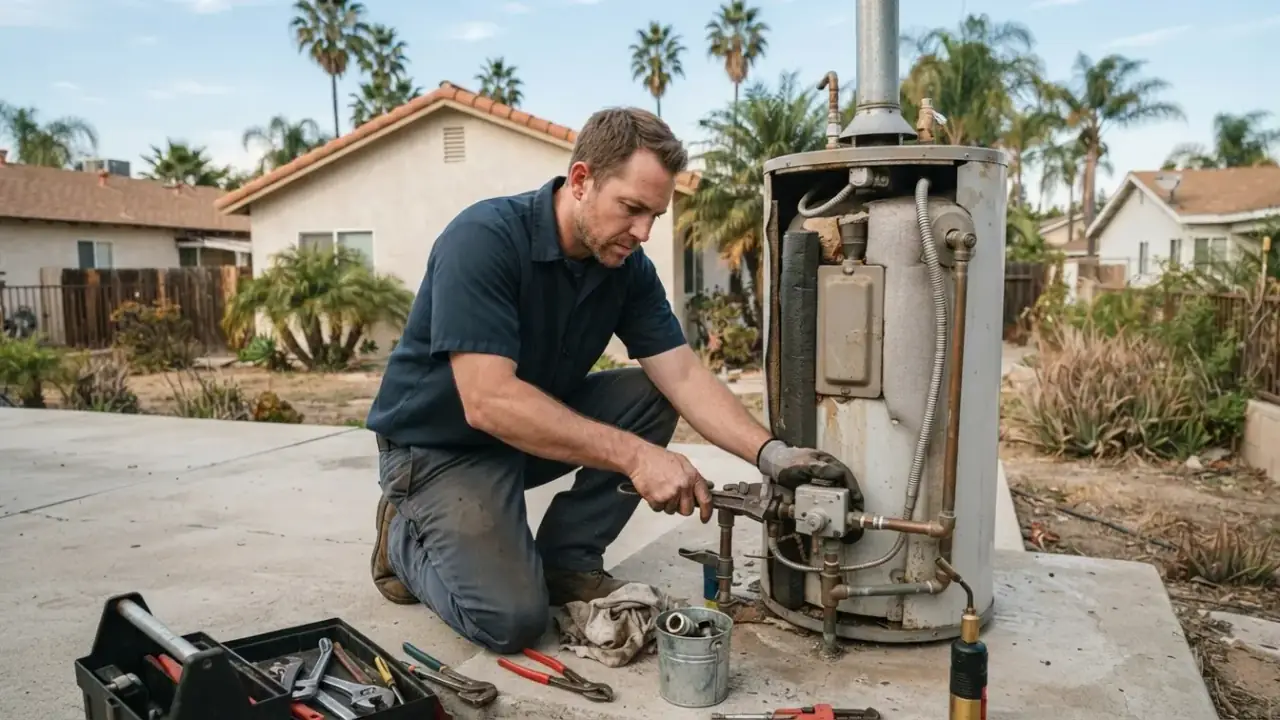
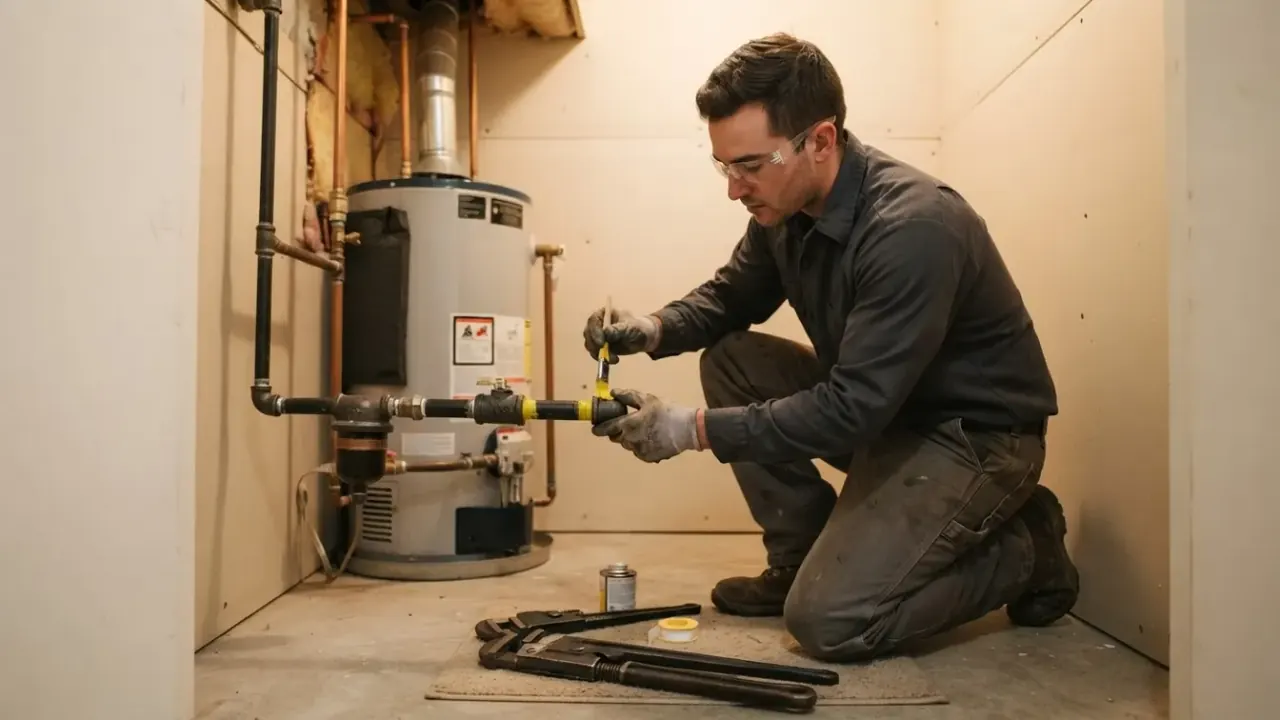
Sediment settles at the bottom of a tank water heater. Over 5 to 8 years it builds a layer that reduces hot-water flow and makes the tank pop and rumble. If your cold water is fine but hot water pressure is weak, this is your answer. Annual flushing prevents it. If the tank is over 10 years old, Water Heater Repair Pico Rivera CA is usually the better money than a flush.
7. Municipal Supply Issues or Street Work
Occasionally the problem isn't in your house at all. Water main flushing, nearby construction, or a fire hydrant being opened up the street can drop pressure for a few hours across a whole block. Check with a neighbor. If their pressure is fine and yours isn't, the issue is on your side of the meter.
Is It the Whole House or Just One Fixture?
This single question cuts your diagnostic time in half. Whole-house low pressure points to the regulator, the main line, or the shutoff valve. Single-fixture low pressure points to the aerator, cartridge, or the branch line feeding that fixture.
Walk the house and test each tap in this order:
- An outdoor hose bib (closest to the meter).
- A kitchen cold tap.
- A bathroom cold tap on the far side of the house.
- The same bathroom's hot tap.
If the hose bib is strong and everything inside is weak, the restriction is between the meter and the house. If cold is fine and hot is weak, look at the water heater. If only one tap is weak, it's the fixture itself. That's a $20 fix, not a $2,000 one.
What to Watch Out For: Mistakes That Make Pressure Worse
The most common mistake we see is turning up the regulator to compensate for a restriction. If your pipes are half-clogged with scale, cranking the PRV to 90 PSI doesn't restore flow - it just stresses every joint, supply line, and appliance in the house. We've replaced more than a few washing machine hoses that burst after a homeowner did this.
Other traps:
- Snake-oil "pipe cleaning" additives. Chemical descalers help marginally in copper. They do almost nothing for galvanized steel, and some are aggressive enough to accelerate corrosion.
- Ignoring a small drip. A pinhole leak that loses a cup an hour is a symptom, not the problem. The pipe around it is usually failing too.
- Replacing the regulator without checking pressure afterward. A new PRV needs to be set with a gauge. We set ours to 55 PSI and verify at two fixtures before we leave.
- DIY repiping a section without matching materials. Connecting copper directly to galvanized steel without a dielectric union causes electrolytic corrosion and a leak within a couple of years.
When to Call a Professional
Call us when the pressure drop is whole-house, when you can't find the source in 20 minutes, or when your water bill has jumped without explanation. Those three signals mean the problem is behind a wall, under a slab, or inside a valve you shouldn't be opening yourself.
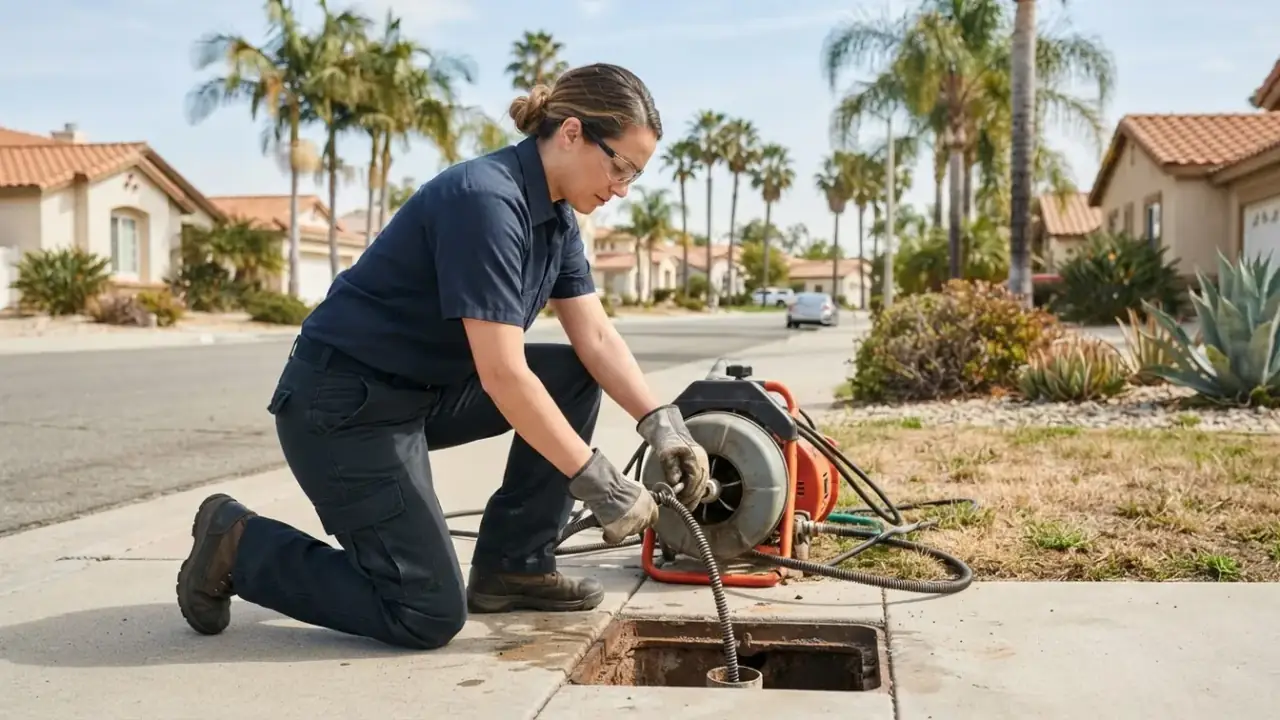
Our team at Pico Rivera Plumbing handles pressure diagnostics every day - we test at the meter, at the regulator, and at the farthest fixture, then tell you exactly what's wrong before we touch anything. If it's a $30 aerator, we'll tell you. If it's a slab leak, we'll show you the thermal image. We also handle the related work that pressure problems tend to expose, including Clogged Drain Cleaning Pico Rivera CA when scale and sediment start backing up drains at the same time.
How Much Does It Cost to Fix Low Water Pressure in Pico Rivera CA?
Typical 2026 pricing in this area breaks down like this:
- Diagnostic visit: $75-$150, often credited toward the repair.
- Aerator or cartridge replacement: $15-$40 in parts, $100-$180 with labor.
- Water pressure regulator replacement: $250-$450 installed.
- Main shutoff valve replacement: $180-$320.
- Leak detection and repair: $350-$900 for most residential cases.
- Water heater flush or repair: $150-$600 depending on scope.
- Partial repipe (galvanized to copper or PEX): $2,500-$6,500.
- Full repipe: $6,000-$14,000 for a typical 1,400-1,800 sq ft Pico Rivera home.
We quote a flat price before we start. No hourly surprises, no "while we're in there" add-ons you didn't approve.
Frequently Asked Questions
Why is my water pressure low in Pico Rivera CA?
Nine times out of ten it's a worn pressure regulator, corrosion inside galvanized pipes, or a hidden leak. If your home was built before 1970 and has original pipes, corrosion is the leading suspect. If your water bill has climbed 15 percent or more, look for a leak first.
How can I fix low water pressure in my Pico Rivera home?
Start with the free checks: open the main shutoff fully, clean the aerators, and test pressure at a hose bib with a $12 gauge. If the whole house reads under 40 PSI, the regulator or main line is the problem and it needs a plumber. Single-fixture issues are usually DIY.
Does a clogged pipe cause low water pressure in Pico Rivera California?
Yes. Scale, rust, and sediment narrow the inside of a pipe and reduce flow, especially in galvanized steel that's 40+ years old. You'll notice it most at fixtures farthest from the meter. Chemical cleaners rarely fix it - replacement of the affected section does.
Who should I call for low water pressure in Pico Rivera?
Call a licensed plumbing contractor that does pressure diagnostics, not just drain work. We test at the meter, regulator, and farthest fixture to isolate the cause before quoting a repair. That prevents paying for a repipe you didn't need.
How much does it cost to fix low water pressure in Pico Rivera CA?
Most fixes land between $150 and $900. A regulator replacement runs $250-$450 installed. Leak detection and repair is $350-$900. Repiping, when it's needed, starts around $2,500 for a partial and $6,000 for a full home. Diagnostic visits are $75-$150.
Get Help With Plumber in Pico Rivera
If your showers have gone weak and you've already ruled out the easy stuff, we can be at your door today. We serve every neighborhood in Pico Rivera - from Plumber in Downtown Pico Rivera to the homes along Slauson and Paramount - and we carry the gauges, regulators, and leak-detection gear to fix most pressure problems in a single visit.
Call (855) 788-4567 and tell us what you're seeing. We'll give you a straight answer on the phone and a flat price before we start.